
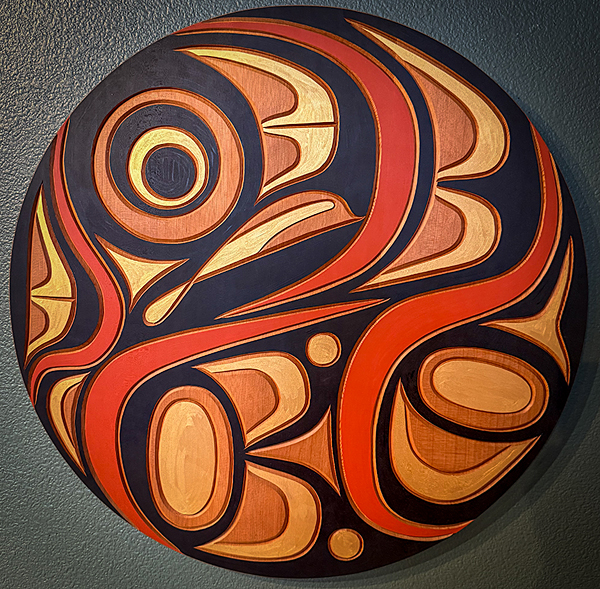
“Eagle Panel” by Jim Charlie
20″ diameter – $2,400
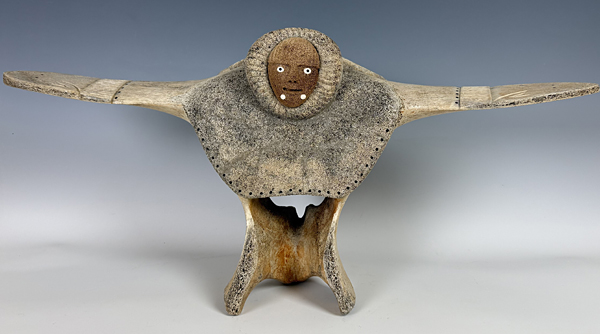
“Wolf Dancer” by Ricky Kuzuguk
30″ w x 14″ h x 10″ d – Sold
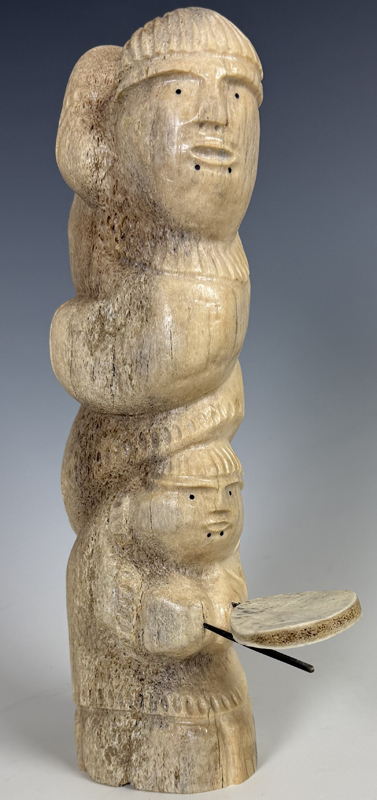
“Drum Dancers” by Ricky Kuzuguk
13″ w x 4″ h x 3″ d – $950
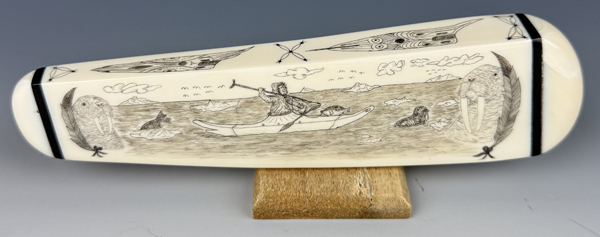
“Hunting Scene” by Fred Kingekuk
Inquire
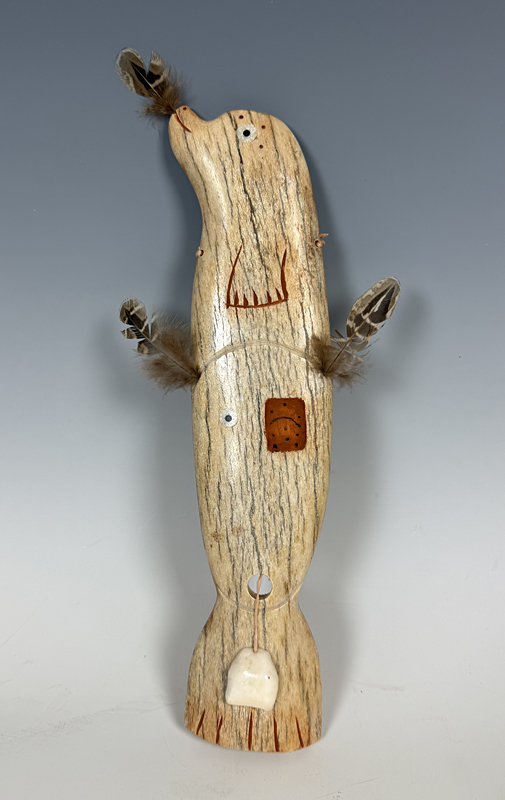
“Singing Seal” by Jerome Saclamana
12″h x 3″d – Sold
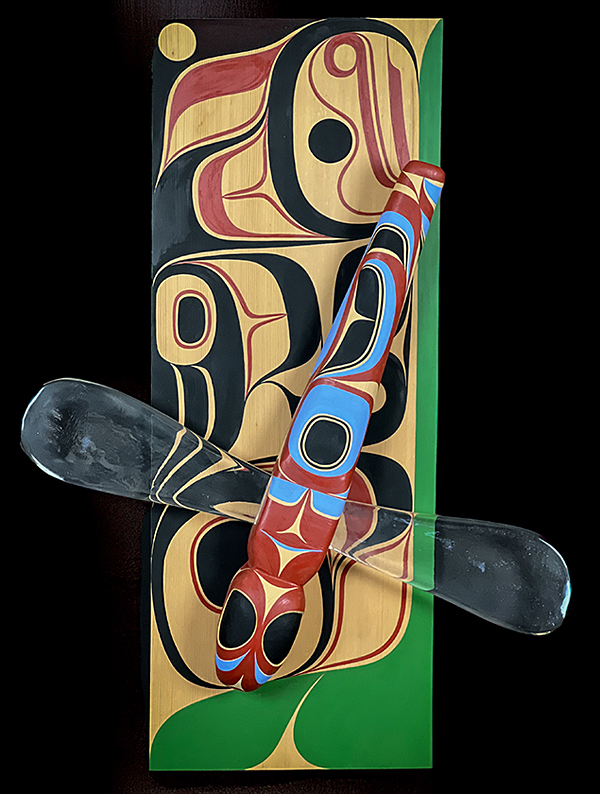
“Dragonfly” by Rande Cook
1.4″5w x 38″h – $6,500
Surrounded by a stark landscape, the Inuit people draw inspiration from their intimate relationship with the few indigenous animals of the Canadian Arctic. In a land of snow and rock, Inuit sculptors work with the limited materials available to them; bone, ivory, fur and stone. Despite the limitations of the Arctic, the Inuit have gained international acclaim for their striking imagery which is often amusing, occasionally disquieting and sometimes both.
Arctic Raven’s collection includes stencil prints and serious works in stone depicting Inuit hunting and fishing themes, as well as more whimsical dancing and walking bears. Swimming sea birds, whales, walrus, seals, caribou and Inukshuk complete the selection. The gallery’s Inuit work also reflects the enduring theme of transformation in the myths and artwork of the Arctic peoples. Whether changing from animal into animal or human into animal, these native sculptures represent the belief that nothing dies – it merely changes form.
In a frozen northern world where Inuit villages are isolated from one another by hundreds of miles of road-less wilderness or thousand miles of ice encrusted sea, distinct carving styles have developed partially in response to the limited materials available. From the primitive yet powerful basalt carvings of Baker Lake region, to the shiny sophistication of Cape Dorset soapstone sculpture, each shows a strong imagination and profound connection to the animal and spiritual realms. Arctic Raven Gallery features works from all the major Inuit carving villages.
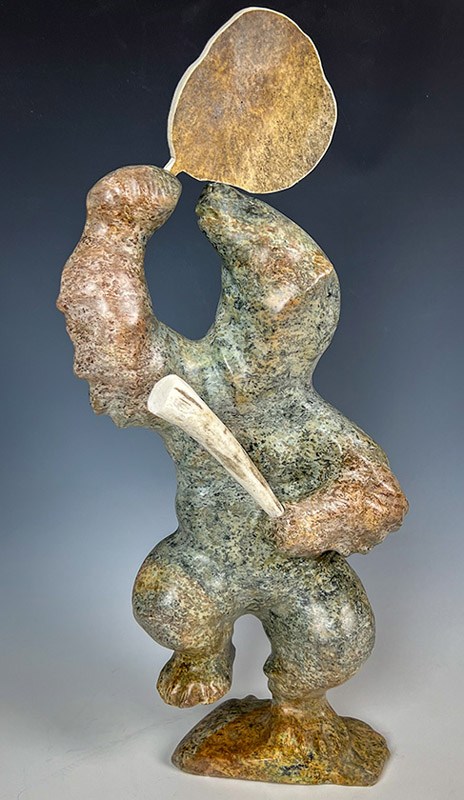
“Drum Dancer” by Mark Totan
10 w x 26 h x 6 d – $3,200
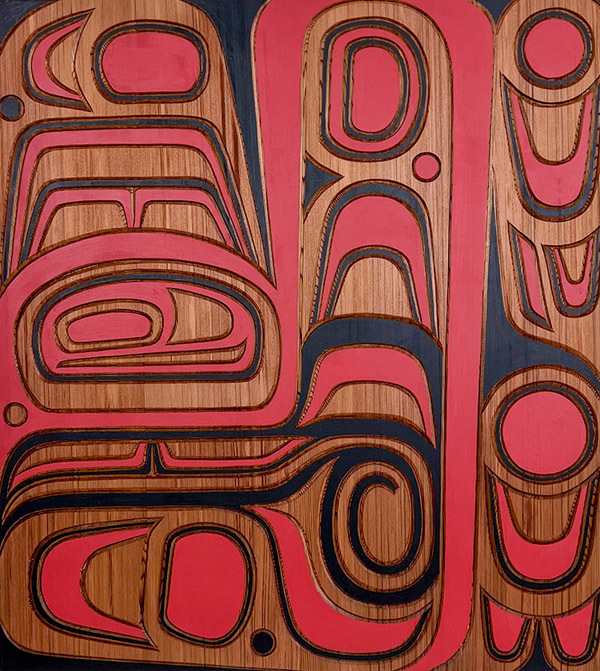
“Butterfly Panel” by Jim Charlie
21″ x 23″ – Sold
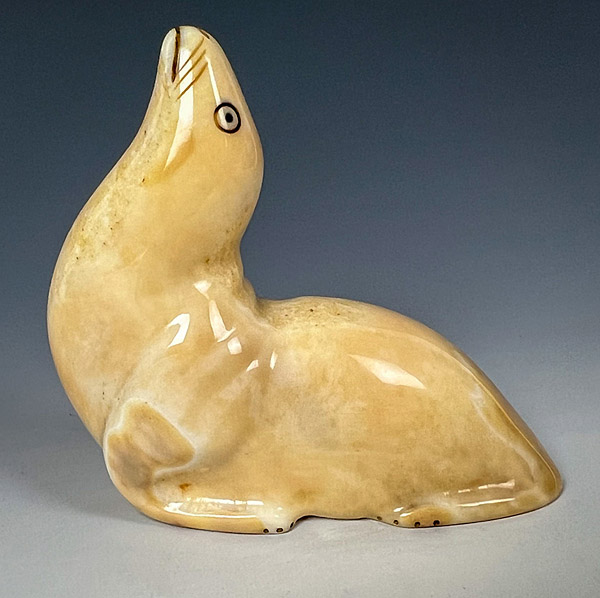
“Old Ivory – Seal” by Unknown Artist
3″ x 2″ x 3″ – Sold
